Clarify a decision
When the path feels crowded, we slow down enough to see what is actually in front of you.

Coaching
You may be carrying a difficult decision, a demanding role, or a transition that has made the old way of working feel too small. I offer a calm, honest conversation where we can sort out the pattern and decide what deserves your attention.

What we can make room for
I am not there to hand you a script. We will notice what is true, name what matters, and turn that into something you can use.
When the path feels crowded, we slow down enough to see what is actually in front of you.
We look at the habits and assumptions that shape how you show up with other people.
The point is not a good conversation by itself. It is knowing what to do differently when Monday arrives.
The work together
Sometimes that is a decision. Sometimes it is the way pressure changes your voice, your patience, or your expectations.
As the conversation becomes clearer, the practical move usually becomes clearer too.
What working together looks like
The first conversation is a chance to hear the whole thing without having to make it tidy first.
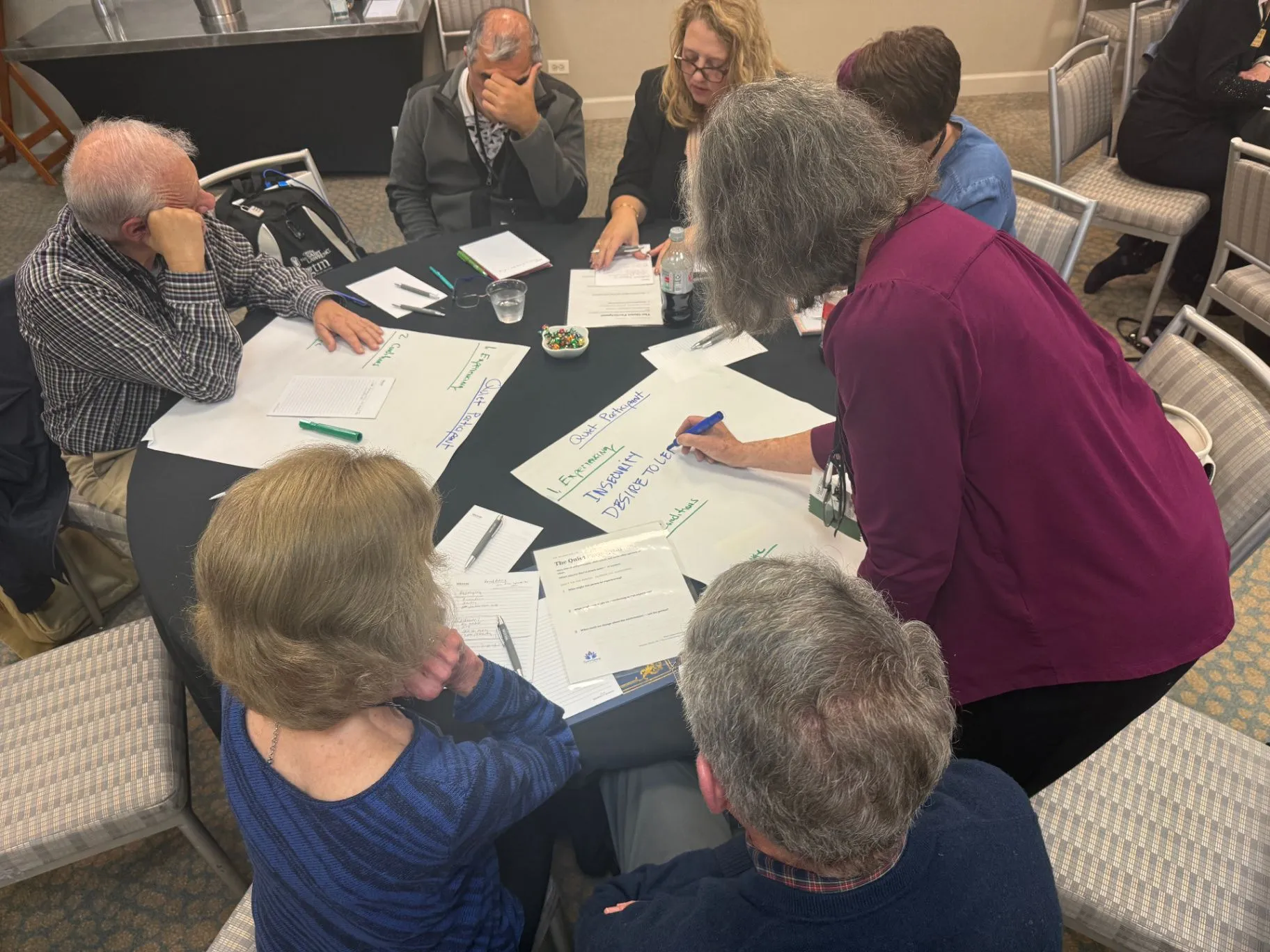
I usually ask what has brought you here now, what you have already tried, and where the situation is costing you more than it should. You do not need to prepare a polished explanation. We can start with the decision you keep postponing, the conversation you keep rehearsing, or the feeling that you are working hard without getting anywhere.
Sessions are available in person in the Chicago area or remotely.
After that first conversation, we decide whether there is useful work for us to do together. Most people meet with me every other week. Some choose weekly sessions for a period when something is moving quickly. A session is a focused conversation about what has happened since we last met, what you are noticing now, and what you want to try before we meet again.
There is no script and no fixed package. The work may stay with one decision for a while, or it may move from a role at work into a pattern that is showing up at home. I will ask direct questions when they are useful, and I will give you room when the answer needs time. You may leave with a small experiment, a conversation to have, or simply a clearer question to carry into the week.
We keep checking whether the work is helping. If the focus changes, we change with it. If a different kind of support would serve you better, I will say that plainly. The aim is not to keep meeting because that is what we started doing. It is to help you see and handle your life with more choice.
When coaching can help
It may be a decision that will not settle, even after you have gathered enough information. It may be a transition where the old way of working no longer fits and the new way has not become clear. Some people are carrying pressure that does not switch off after hours, or leading a team through change while trying to stay steady themselves.
Others are stepping into a bigger role and finding that the habits that helped them get there are now getting in the way. I also work with someone who looks successful on paper and knows something is off. There may be no obvious crisis. There is simply a growing sense that the way forward needs a more honest look.
A different kind of effort
When a pattern keeps returning, the first response is often to push harder. You may read another book, make a better plan, or wait for the right moment to begin. Those efforts can help with information and timing, but they usually work at the level of the visible problem.
The pattern underneath can stay untouched. If part of you expects a difficult conversation to end badly, a stronger calendar will not make the conversation feel safe. If your idea of being a good leader depends on having every answer, more effort can make it harder to ask for help. Coaching gives us a place to look at that part without turning it into a flaw.
What I bring
I am a Certified Leadership Coach with a PhD and decades of experience in education and in working with teams and leaders. I bring strategic understanding to the decisions and systems around you, along with emotional understanding of what those decisions ask of you. I do not treat one as more real than the other.
A few practical questions
It depends on the question and how much of your life it touches. Some people come for a short period around a decision. Others stay for several months while a larger transition takes shape. We review the work as we go.
That is a common place to start. We can work with what you do know, including what feels wrong, repetitive, or difficult to name. A clearer direction often arrives after the conversation has somewhere to begin.
No. Coaching is focused on the present and the future, with attention to decisions, patterns, and goals in your life and work. It is not a substitute for therapy or care from a licensed mental health professional.
We look for changes you can recognize in ordinary situations. You may make a decision with less wrestling, handle a conversation differently, or notice a familiar response before it takes over. We talk about those signs directly.
In Their Words
“Michael has helped guide me in my business and professional growth. Not only through the tools he provides, but in his calm, compassionate approach. Michael has enabled me to adopt a growth mindset that is invaluable both in my personal and professional life.”
Stacy Chambers
Publisher, Batavia Living
“Michael has helped guide me in business and professional growth.”
Joe King
Owner and PT, Physical Therapy Advantage
If this feels familiar